
Comparing contracts with AI: practical support for Belgian lawyers
A moved clause or a short new exception can matter more than a rewritten page. A useful comparison makes substantive changes visible.
Start with the actual negotiation
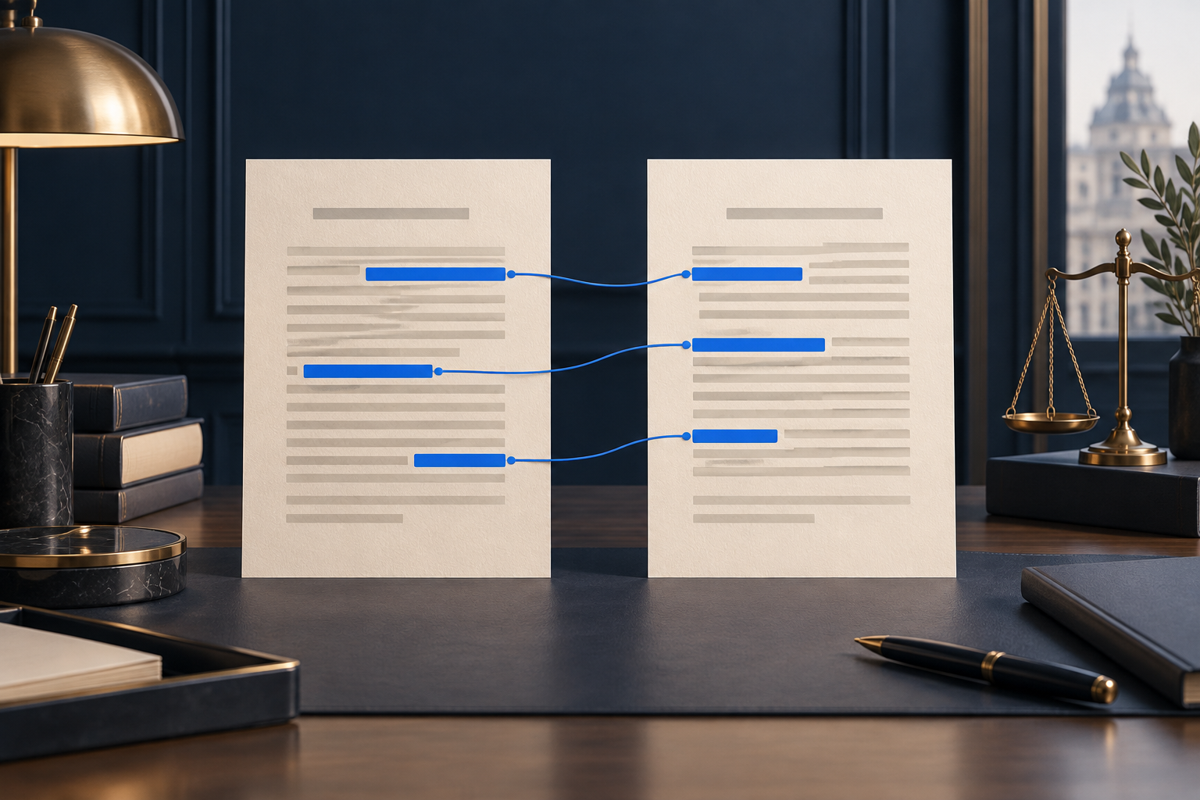
A small business receives a revised supplier agreement. In this fictional example, the document looks almost unchanged. The lawyer wants to identify differences before discussing substance with the client. AI can prepare that comparison if both complete versions are available in an approved environment.
Reform of the Belgian Civil Code also reminds practitioners to place older templates in their legal timeframe. FPS Justice guidance and the applicable text help identify the relevant framework. The word contract alone does not establish which provisions or transitional rules need to be considered.
Ask for a traceable comparison
A precise instruction requests the clause, previous wording, revised wording and question raised for each change. Deletions must be as visible as additions. A broad summary can hide a short but significant exception. Every entry should be checked against both documents.
Consider a service clause that changes from corrections being included to corrections requiring a separate quotation. That calls for a commercial discussion. The tool can identify the change without deciding whether it is acceptable. The client then explains what they expect from the service.
Connect the clause to other commitments
A change in duration may affect pricing, termination or return of data. The lawyer requests a list of linked clauses and checks cross-references. AI supports reading across the agreement here; it should not invent an abstract contractual safety score.
The table becomes a meeting aid. Negotiation points, matters requiring explanation and questions lacking context remain separate. The final version is read as a whole: individually reasonable amendments can still produce an inconsistent agreement when combined.
Assess a concrete result
A firm can record how many material differences were found and the time required to check them. A faster first reading must not be confused with completed legal approval. The intended benefit is a better prepared discussion and a clear record of the client’s decisions. That record also supports later work when someone needs to understand why a particular clause was accepted.
Sources and references
General information. Application to a matter depends on its facts and the rules in force.