
Law & AI
AI risks on platforms: the DSA puts evidence at the heart of scrutiny
Following the European roundtable of 23 September 2026, how can AI risks on large platforms be assessed? The role of researchers and the limits of regulatory scrutiny.
Legal perspectives and practical approaches for lawyers, firms and their clients.
A publication by Mashaah LLC40 articles
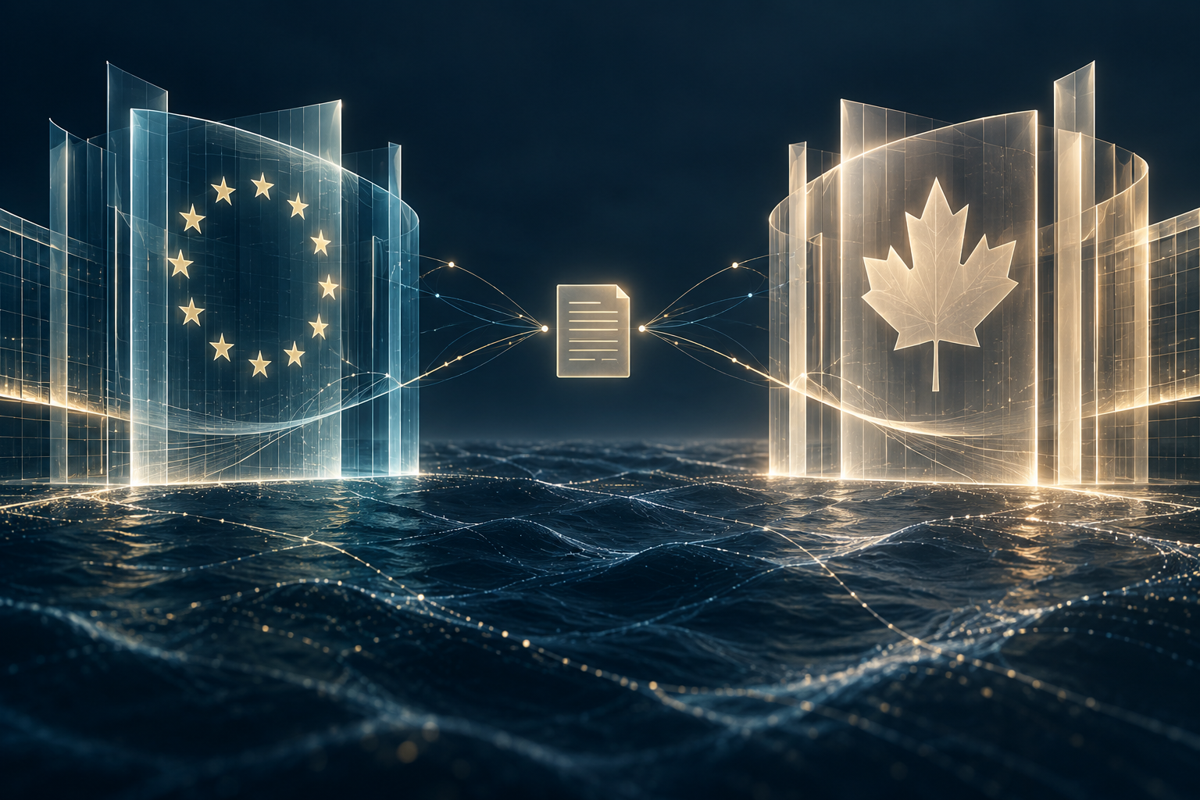
The digital dialogue held on 1 October 2026 covers AI safety and regulation. Its announcement creates no exemption or automatic recognition.
Read articleFollowing the European roundtable of 23 September 2026, how can AI risks on large platforms be assessed? The role of researchers and the limits of regulatory scrutiny.
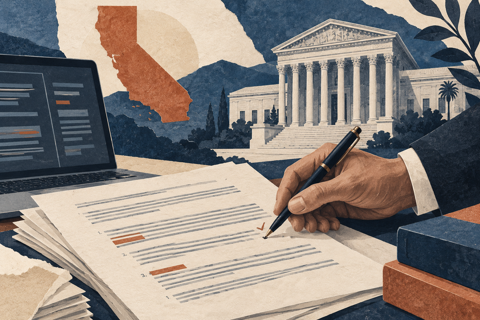
Signed on 30 September 2026, SB574 addresses citations, confidential information and human judgment. What will change in California, and what can a Belgian law firm learn?
Already paid, a broken meter or a displayed parking disc? Learn how to organise evidence and prepare two letters with the new AILawyer parking tool.
FPS Employment guidance on contracts starting from 1 August 2026 shows why an old reference table may no longer be enough.
The European timetable has changed. Firms need to identify their actual uses and the obligations relevant to them.
Practical applications for lighter preparation, more focused review and more time for advice.
People may understand their problem without knowing how to explain it. AI can help prepare an account and organise documents before professional advice.
The brochure published in April provides a starting point for client discussions and for organising a firm’s own use of AI.
Translating a sentence is not enough to preserve its legal meaning. A Belgian firm can still gain practical value from carefully organised multilingual preparation.
A clear file makes it easier to ask useful questions about notice, repairs or a deposit. Here is a practical approach for Belgium.
A trial involving a few defined tasks can teach more than a broad productivity promise. Here is a concrete protocol without invented performance figures.
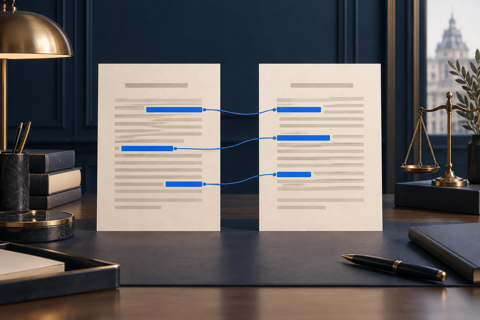
A moved clause or a short new exception can matter more than a rewritten page. A useful comparison makes substantive changes visible.
Documents, the customer’s status and previous reminders shape the next step. Small businesses can organise this preparation more effectively.
AI can help compare decisions. First, establish that the right judgment is available and has actually been read.
A chronology and open questions can support preparation. A drafting tool does not thereby become a mediator.
Understandable information, useful tools and a clear place for the lawyer's work.
Preparing files, comparing documents and making more time for clients: useful applications that keep the lawyer in charge of the analysis.
Understanding concepts, preparing questions and using practical tools with a clear view of their purpose.
The useful questions concern sources, errors and the ability to recognise missing information.
A gradual rollout helps identify suitable uses and see what genuinely improves the work.
A well-prepared question can help you understand a Belgian legal issue and organise the next steps.
Organising facts and preparing questions can make a first appointment far more useful.
Useful information makes limitations understandable at the moment a person needs them.
Calculators and guides can support case preparation when assumptions are clear and results are read in context.
An urgent tax text needs independent verification, even when it looks convincing.
A practical way to verify citations before they enter a note or court submission.
Languages, legal systems and professional practice: what internationalisation requires and where Mashaah LLC fits into that work.
Choosing a tool starts with a simple question: what information will leave the firm's environment?
Artificial intelligence does not simply integrate into the legal system; it reshapes its foundations. Discover how AI transforms the role of the lawyer and access to law.
Discover Juribot, the conversational chatbot for Belgian law designed to popularize legal concepts and help users better understand their rights simply.
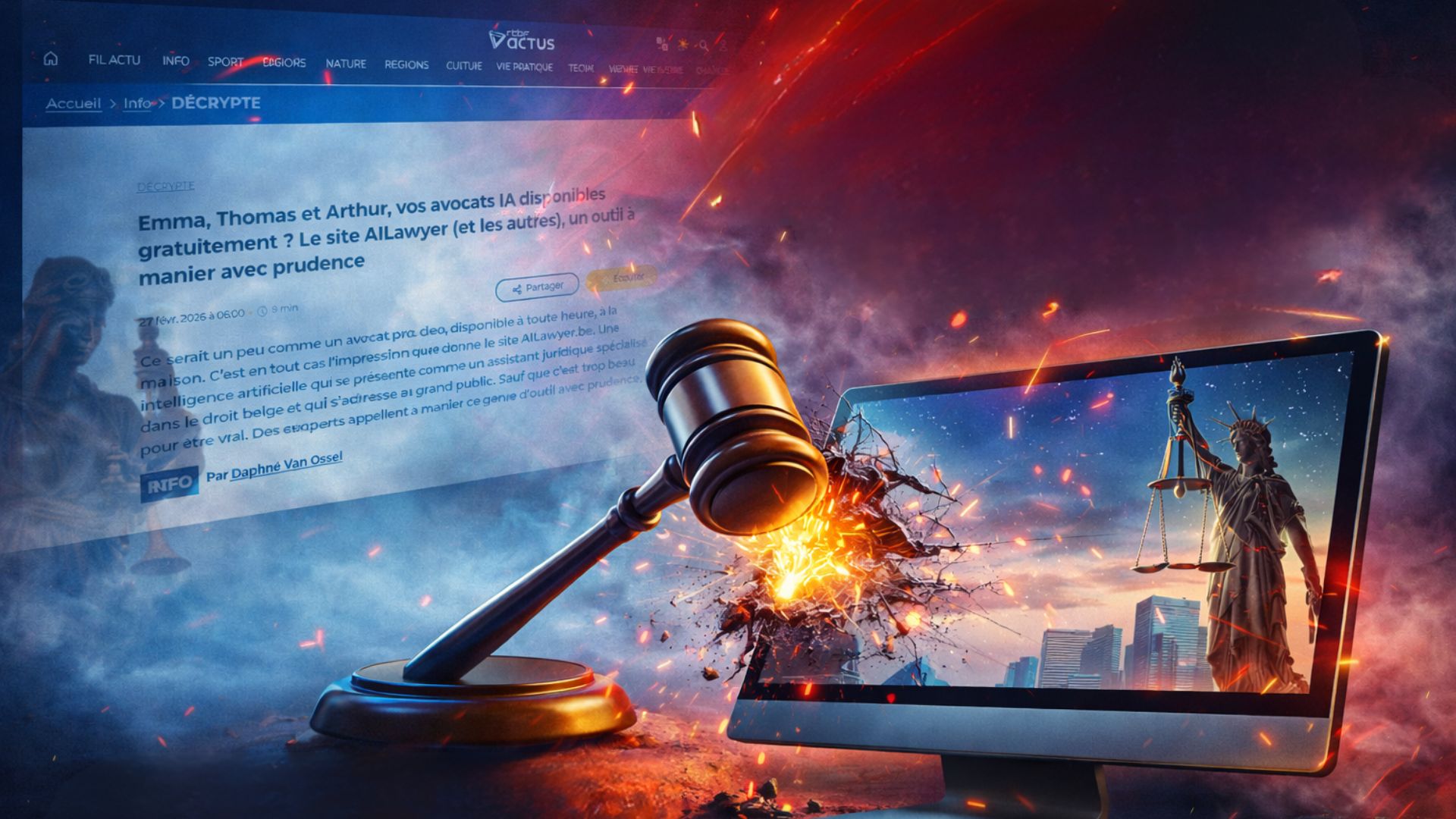
The law is a living subject. Artificial Intelligence even more so. Recently, a press article examined our platform with a caution tinged with skepticism.
The debate around artificial intelligence in the legal sector is intensifying. As technologies advance, they raise hope, caution, and legitimate questions.
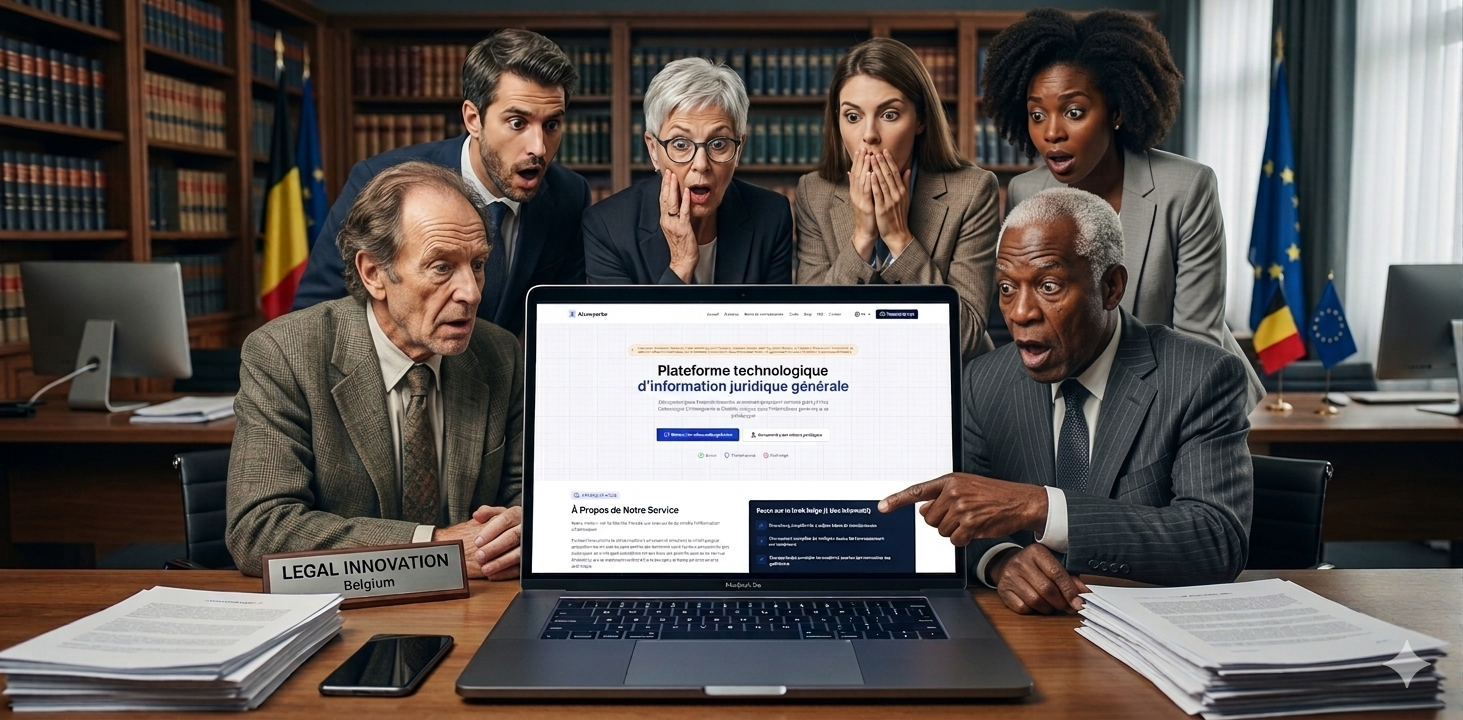
The article published by RTBF about AILawyer presents itself as cautious. But caution must not become a cover for an incomplete reading. Here is our response.
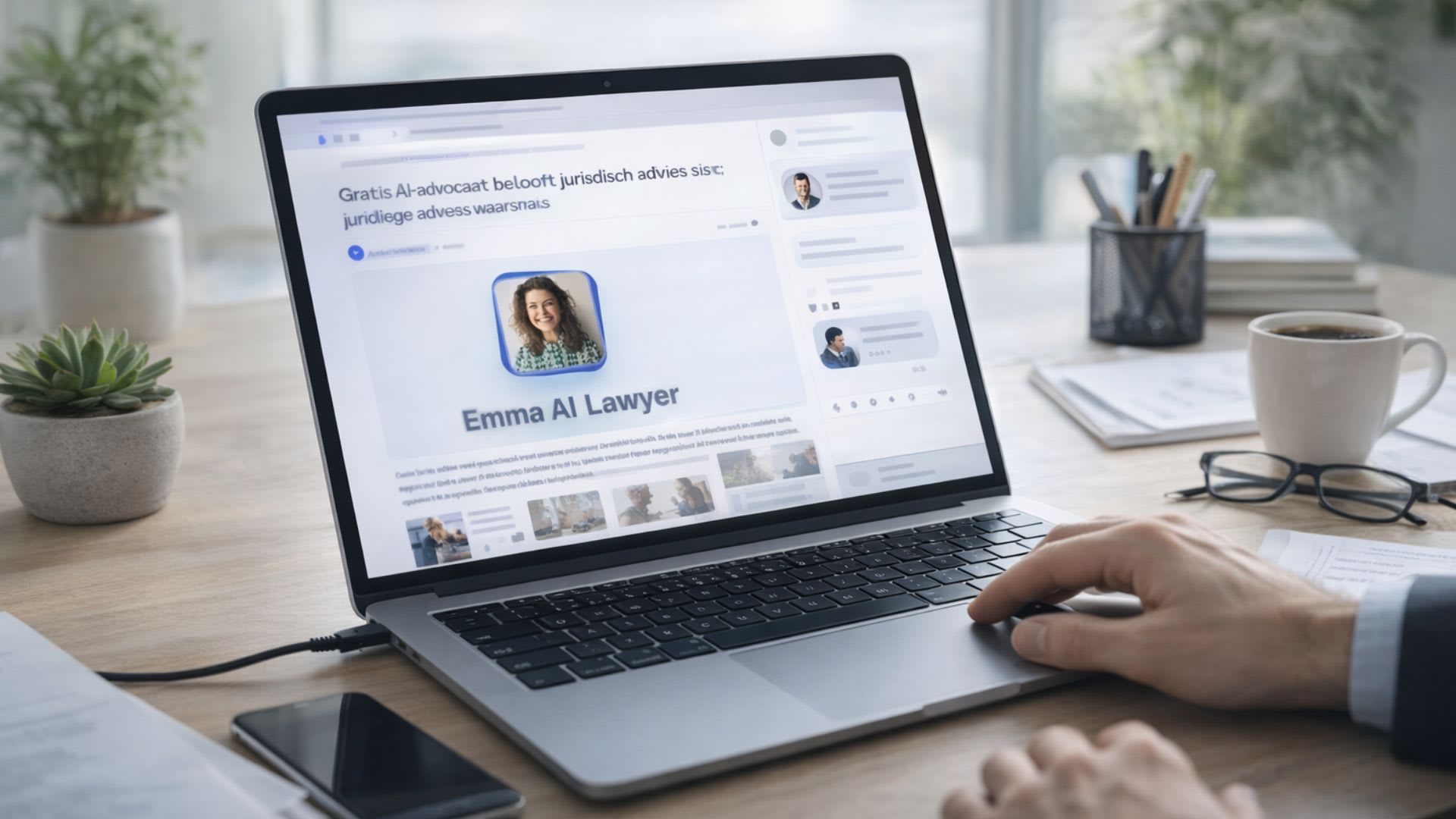
RTBF recently dedicated an article to AILawyer and our virtual legal assistants Emma, Thomas, and Arthur. An opportunity to recall our mission and the importance of using these tools wisely.
Following recent concerns regarding the use of artificial intelligence in the legal field, Ailawyer wishes to provide clarification to avoid any confusion about the nature and scope of its tool.
A recent judicial decision reported in the Belgian media has drawn attention to the use of artificial intelligence in the context of legal proceedings...
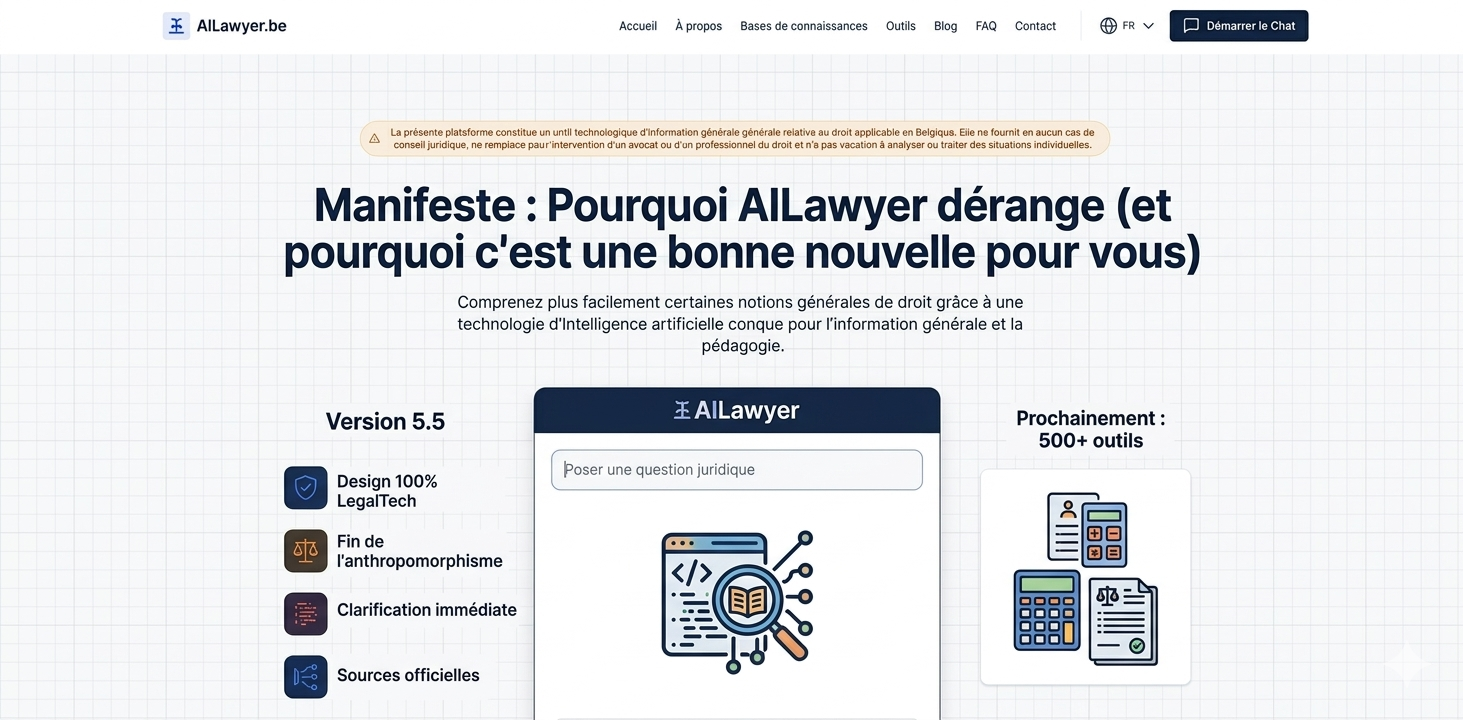
A new version of the Ailawyer site will be online in April. This will be the most important evolution since the launch of the site, marked by a technical overhaul, the integration of new components and the gradual deployment of a large library of practical tools for the general public.
For many citizens, the law remains a difficult universe to grasp. The emergence of digital tools based on artificial intelligence opens up new possibilities for making legal information more accessible.
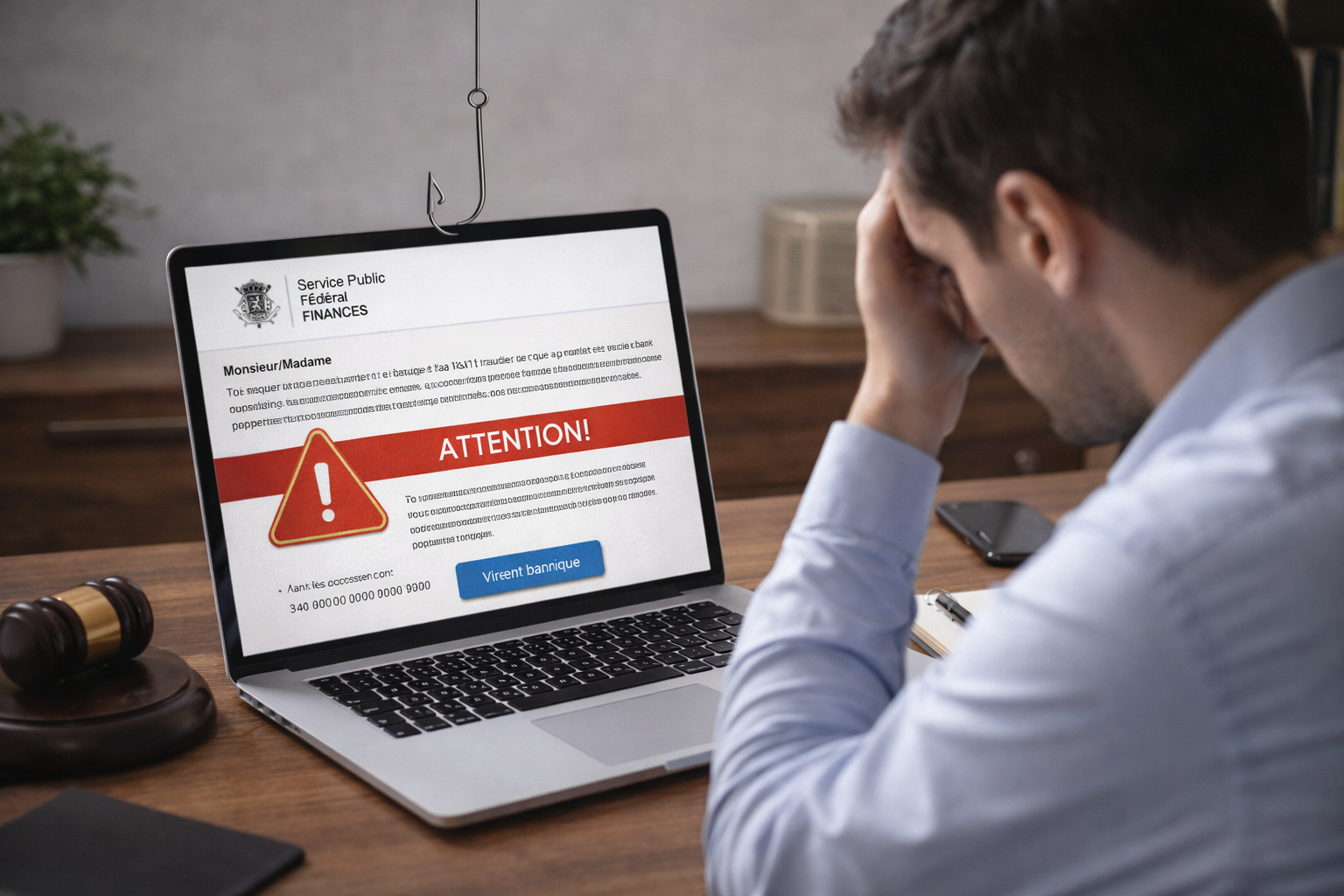
Every year, thousands of Belgian citizens receive fraudulent emails or SMS messages claiming to come from the FPS Finance. These messages have a simple goal: to push you to click or pay.

These Terms of Use govern access to and use of the AILawyer.be platform, accessible at www.ailawyer.be. By using this service, you unconditionally accept these Terms. If you do not accept these terms, you must cease all use of the service.
The chat, content and public tools are accessible without an account. Preparing and saving parking and traffic cases requires email sign-in. No payment is currently requested for these features. The service may be unavailable or limited; answers and letters do not guarantee a result.
The information provided by AILawyer.be is exclusively informative and general in nature. It does not in any way constitute legal advice, a consultation, a recommendation or a lawyer's service. AILawyer.be does not replace the intervention of a qualified lawyer or legal professional. For any concrete legal situation, it is essential to consult a qualified professional.
The user undertakes to use the service for lawful purposes and in accordance with these Terms. It is prohibited to use the service to distribute unlawful content, for harassment or fraud, to attempt to bypass the platform's security measures, or for any use contrary to public order and good morals.
All content on AILawyer.be (texts, graphics, logos, interface) is protected by intellectual property rights and belongs to AILawyer or its partners. Any unauthorized reproduction, representation or exploitation is strictly prohibited. Legislative and case law texts cited are works in the public domain.
AILawyer reserves the right to modify these Terms at any time. Modifications take effect upon publication. Continued use of the service after modification constitutes acceptance of the new terms. AILawyer also reserves the right to suspend or interrupt access to the service at any time, without notice or compensation.
Request access, correction, deletion or other applicable rights at contact@ailawyer.be. Mashaah LLC, 1111B S Governors Ave, STE 28451, Dover, DE 19904, USA, is the publisher and data controller. You may complain to the Belgian Data Protection Authority. Rights apply under the conditions set out in the GDPR.
Messages, relevant conversation history and text from PDFs you attach to the chat are sent to our server and then to DeepSeek. Your question may also be sent to Perplexity for source research or used to consult public sources. A copy of conversations remains in your browser until you delete it. Closing the browser does not erase it. Avoid sensitive data and information identifying a person. Your account and saved parking and traffic cases are stored in Turso. They include contact details, facts, draft letters and evidence file names. These two modules do not upload original files; they remain on your device. Sign-in uses a temporary email code via Resend or a hashed password. Session cookies enable account access. Cases are not public; restricted access does not guarantee absolute confidentiality or legal professional privilege. The contact form collects the contact details and message you enter and sends them to the team through Resend.
Contact form data is used to answer and follow up your request. Chat data is used to process your questions. Technical data may be processed to operate and protect the service. The site displays advertising recommendations for Vise la Réussite articles, also published by Mashaah LLC. These links and images hosted on AILawyer add no trackers. No Google advertising scripts or audience analytics tools are active.
Depending on its purpose, processing a contact request relies on steps you request before a contractual relationship or on the legitimate interest in answering your enquiry. Necessary technical functions support operation and security. No consent to optional cookies is currently requested.
Your storage notice preference is kept on your device for six months. Local chat history remains until you delete it in the chat or clear your browser data. Contact messages are retained for follow-up and applicable obligations; you may request deletion. This notice does not guarantee immediate deletion of data held by technical service providers.
You may request access, correction, erasure, restriction and, where the conditions apply, portability, and exercise your right to object. Contact the team through the form. You may also complain to the Belgian Data Protection Authority.
Netlify hosts the website. Turso stores accounts and saved cases; Resend processes sign-in and contact emails and informational parking letters whose submission you authorise. DeepSeek processes chat messages; Perplexity may be used for source research. Providers may process data outside the European Economic Area. This notice does not guarantee that providers retain no data or make no international transfers.
In the parking and traffic modules, your account and cases you choose to save are stored in Turso. A case includes your contact details, facts, draft letters and evidence file names. PDFs and photos of parking notices are read on your device. Supporting files remain on your device and are submitted separately. An optional informational copy through Resend includes the PDF letter and your details for the chosen recipient and does not replace appeal formalities. Replies go to your account email. A daily task removes email drafts after 24 hours and sending records after 180 days. Saved cases remain until a deletion request. DeepSeek for notices is disabled until processing and transfer safeguards have been checked. Sign-in uses a temporary single-use email code sent through Resend or a hashed password. Session cookies provide account access. Request access or deletion at contact@ailawyer.be.
Messages, relevant conversation history and text from PDFs you attach to the chat are sent to our server and then to DeepSeek. Your question may also be sent to Perplexity for source research or used to consult public sources. A copy of conversations remains in your browser until you delete it. Closing the browser does not erase it. Avoid sensitive data and information identifying a person.
History is saved in your browser’s local storage and may remain accessible on a shared device. Delete conversations in the chat or clear the site’s browser data. Local deletion does not erase processing already performed by providers.
Netlify hosts the website. Turso stores accounts and saved cases; Resend processes sign-in and contact emails and informational parking letters whose submission you authorise. DeepSeek processes chat messages; Perplexity may be used for source research. Providers may process data outside the European Economic Area. This notice does not guarantee that providers retain no data or make no international transfers.
Your account and saved parking and traffic cases are stored in Turso. They include contact details, facts, draft letters and evidence file names. These two modules do not upload original files; they remain on your device. Sign-in uses a temporary email code via Resend or a hashed password. Session cookies enable account access. Cases are not public; restricted access does not guarantee absolute confidentiality or legal professional privilege.
AILawyer provides information and helps prepare documents. Using it does not create an attorney-client relationship or legal professional privilege. Anonymise questions and PDFs before sending them. Letters remain drafts for you to check. For selected verified official addresses, the parking module offers an optional informational email copy through Resend, after preview and explicit authorisation. Replies go to your account email. This copy does not replace appeal formalities or automatically suspend deadlines. AILawyer prepares the registered-post PDF; you sign the letter, add evidence and lodge it yourself.
Request access, correction, deletion or other applicable rights at contact@ailawyer.be. Mashaah LLC, 1111B S Governors Ave, STE 28451, Dover, DE 19904, USA, is the publisher and data controller. You may complain to the Belgian Data Protection Authority. Rights apply under the conditions set out in the GDPR.
The information available on AILawyer.be is purely informative and general in nature. It does not and cannot be equated with legal advice, a legal consultation, a professional recommendation, or a service provided by a lawyer or other legal professional.
AILawyer.be is a technology platform. It has no qualification as a lawyer, notary, legal adviser or any other regulated legal professional. In no event does use of this service create an attorney-client relationship or any other professional legal advisory relationship.
AILawyer.be cannot be held liable for decisions made by a user based on information provided by the platform. The user is solely responsible for how they use the information obtained. Any important legal decision must be preceded by consultation with a qualified lawyer.
Although we strive to provide accurate and up-to-date information on Belgian law, AILawyer.be does not guarantee the completeness, accuracy or currency of all available information. The law constantly evolves; information provided may not reflect the latest legislative or case law developments.
Certain areas of law absolutely require the intervention of a qualified professional, including: ongoing judicial proceedings, criminal cases, complex disputes, immigration procedures, and any legal emergency. For these matters, consult a lawyer without delay.
AILawyer.be may provide links to external sources (legislative texts, case law, official sites). We are not responsible for the content of these third-party sites or their availability. Mentioning an external source does not constitute endorsement of its content.
These terms are governed by Belgian law. Any dispute relating to the use of the platform shall be subject to the exclusive jurisdiction of the Belgian courts.
For any concrete legal situation affecting your rights and obligations, we strongly encourage you to consult a qualified lawyer or legal professional. AILawyer.be is an orientation and legal understanding tool, not a substitute for professional legal advice.
MASHAAH LLC Registered office: 1111B S Governors Ave STE 28451, Dover, DE 19904, USA Email: contact@mashaah.com Phone: +1 302 240 0732
Benelux (BE / NL / LU) — Nexus BM Email: info@nexusbm.be Phone: +32 491 76 76 52 France Exclusive distribution partnership currently being finalised. For any urgent enquiries, contact headquarters (Mashaah LLC) or Nexus BM. International (Outside EU) — Mashaah LLC Registered office: 1111B S Governors Ave STE 28451, Dover, DE 19904, USA
AILAWYER is not a law firm. The AILAWYER application is a technology tool for analysis and management assistance, based on artificial intelligence. It does not provide binding legal advice and in no way replaces the judgement and responsibility of a qualified legal professional. The analyses, summaries and documents generated by AILAWYER are provided for purely informational purposes and must be verified, corrected and validated by a lawyer. MASHAAH LLC and its distributors accept no liability for the use of AI-generated results in legal proceedings or client advisory contexts.
All graphic, structural, software and algorithmic elements of the AILAWYER application (excluding open-source components and third-party AI models) are the exclusive property of MASHAAH LLC. Any reproduction, even partial, without authorisation is prohibited.
Netlify hosts the website. Turso stores accounts and saved cases; Resend processes sign-in and contact emails and informational parking letters whose submission you authorise. DeepSeek processes chat messages; Perplexity may be used for source research. Providers may process data outside the European Economic Area. This notice does not guarantee that providers retain no data or make no international transfers.