
Phishing in the name of the FPS Finance: how to avoid tax scams in Belgium
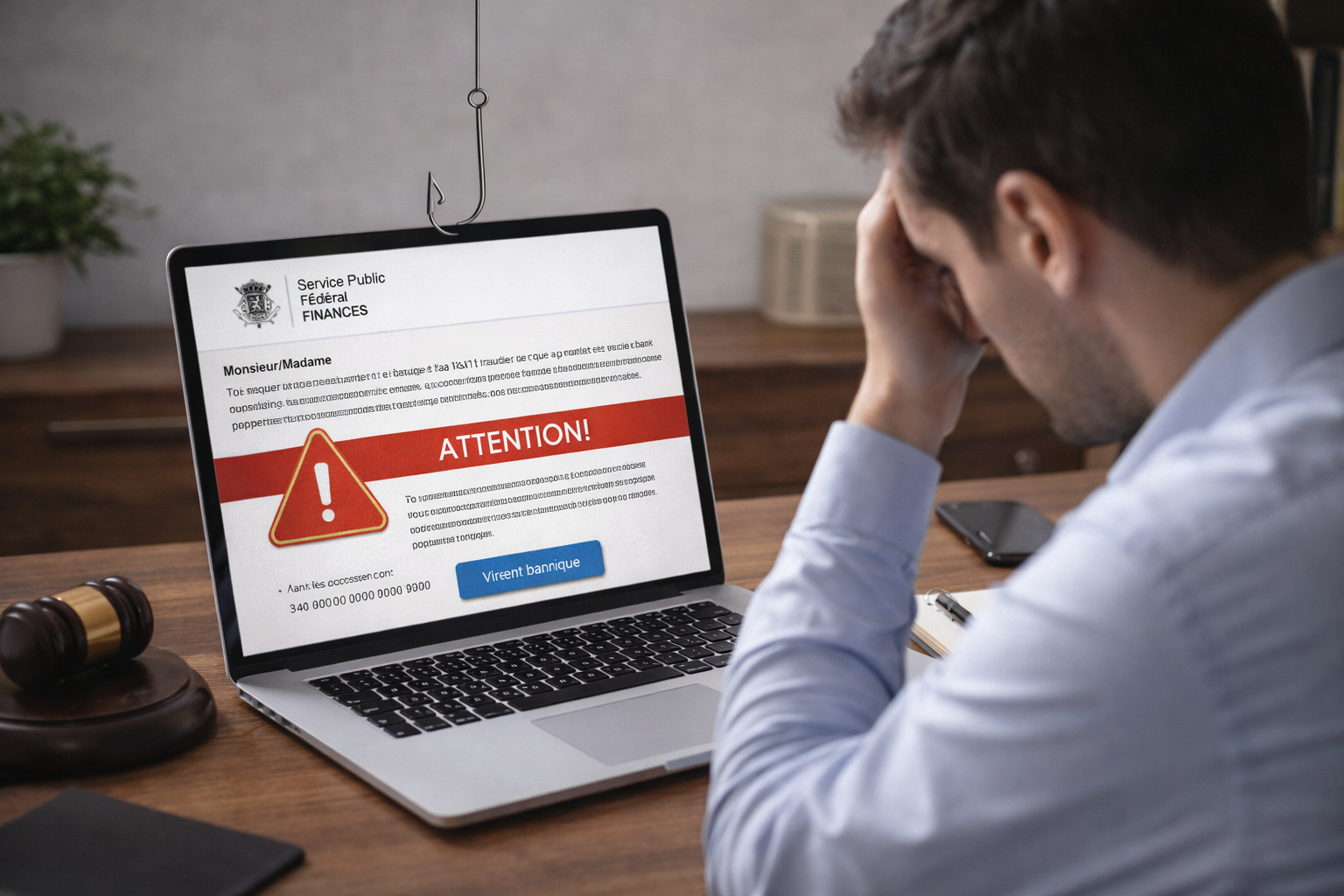
Every year, thousands of Belgian citizens receive fraudulent emails or SMS messages claiming to come from the FPS Finance. These messages have a simple goal: to push you to click or pay.
Archive. Historical publication retained in its original context. Information and announcements reflect the situation at the original publication date.
Every year, thousands of Belgian citizens receive fraudulent emails or SMS messages claiming to come from the FPS Finance. These messages have a simple goal: to push you to click or pay.
On Ailawyer, we explain in a clear and accessible way how to recognize these scams and how to react.
Understanding tax phishing is essential today to protect your finances and your data.
What exactly is tax phishing?
Phishing is a technique used by fraudsters to impersonate an official administration.
In the case of the FPS Finance, scammers send messages indicating for example:
- that you are entitled to a tax refund
- that you must pay an urgent tax
- that there is a problem in your tax file
- that your tax account needs to be verified
The goal is to make you click on a link or transmit sensitive information.
How to recognize a fake message from the FPS Finance?
Certain clues should immediately alert you.
1⃣ A message that puts you under pressure
Fraudsters play on urgency:
- “Final reminder”
- “Immediate payment required”
- “Time-limited refund”
Public administrations rarely use this type of pressure.
2⃣ A request for confidential information
A suspicious message may ask you for:
- your bank details
- your password
- your digipass
- your card number
As a general rule, authorities never ask for this information by email or SMS.
3⃣ A dubious link
Fraudulent links sometimes look like official sites. But they often contain:
- mistakes
- strange addresses
- unusual extensions
Before clicking, always take the time to check.
4⃣ A poorly written message
Scam attempts frequently contain:
- spelling mistakes
- awkward sentences
- an impersonal tone
These details may seem minor, but they are often revealing.
How to verify tax information safely?
If you receive a message regarding your taxes:
- Log in directly to the official site via your browser
- Consult your personal tax space
- Never click on a link received by email or SMS
Adopting this simple reflex avoids the majority of frauds.
What to do if you receive a fraudulent message?
Here are the good reflexes to adopt:
- do not answer
- do not click
- do not pay anything
- report the message
- delete it
If you have transmitted information or made a payment, contact your bank quickly.
Why is this type of scam increasing?
Tax phishing works because it exploits:
- the fear of sanctions
- administrative complexity
- trust in institutions
Fraudsters today use increasingly sophisticated techniques. It is therefore essential to stay informed.
The role of Ailawyer
On Ailawyer, our goal is to make the law understandable for everyone. We offer:
- accessible legal explanations
- secure informative tools
- resources to better understand your rights
Useful links
Official FPS Finance explanation page on phishingPhishing statistics in Belgium (recent figures)
Number of fraudulent messages reported
- • In 2025, Belgians reported nearly 10 million suspicious messages related to phishing.
- • In 2024, more than 9 million messages had already been reported.
- • This represents approximately 25,900 reports per day.
Conclusion: Phishing is massive and permanent in Belgium.
Total amount stolen by phishing
In 2023, approximately 40 million euros were stolen via phishing.
Despite bank security systems, phishing remains a highly profitable fraud for cybercriminals.
Public knowledge level
- • 9% of Belgians have never heard of phishing.
- • Nearly a third of young people do not know the term.
This explains why scams continue.
Effectiveness of protection systems
Approximately 75% of fraudulent transfers are blocked or recovered by banks.
But the risk remains real.
What to remember about phishing in Belgium
Weight in cybercrime
Represents about 60% of attacks in Europe. It is the main gateway for scammers.
Official reports
In 2024, the FPS Economy received more than 2,300 reports, with more than €5.6 million in reported damages.
Massive impact
Affects millions of people and causes tens of millions of euros in losses.
Evolution
Is the #1 digital fraud and is growing with AI and deepfakes.
In summary
If a tax message seems suspicious to you:
- Always take the time to check
- Never communicate your sensitive data
- Favor official channels
Vigilance remains the best protection against scams.
This article is general information and does not constitute legal advice.
General information. Application to a matter depends on its facts and the rules in force.